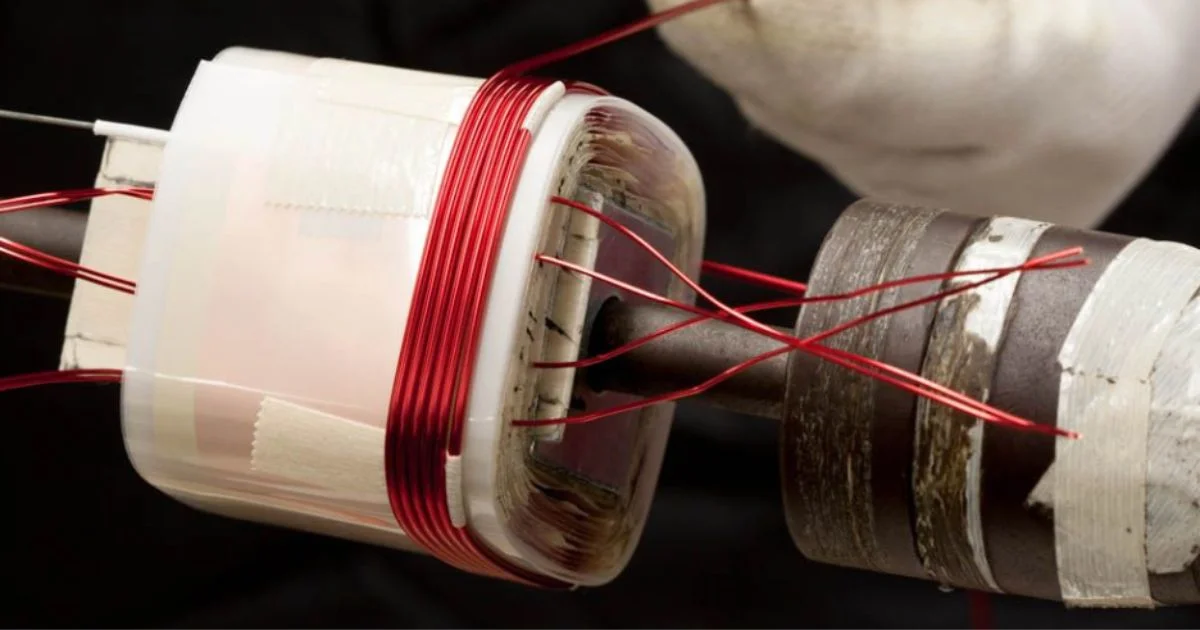
Why Custom Inductors Can Make a Difference in Your Design
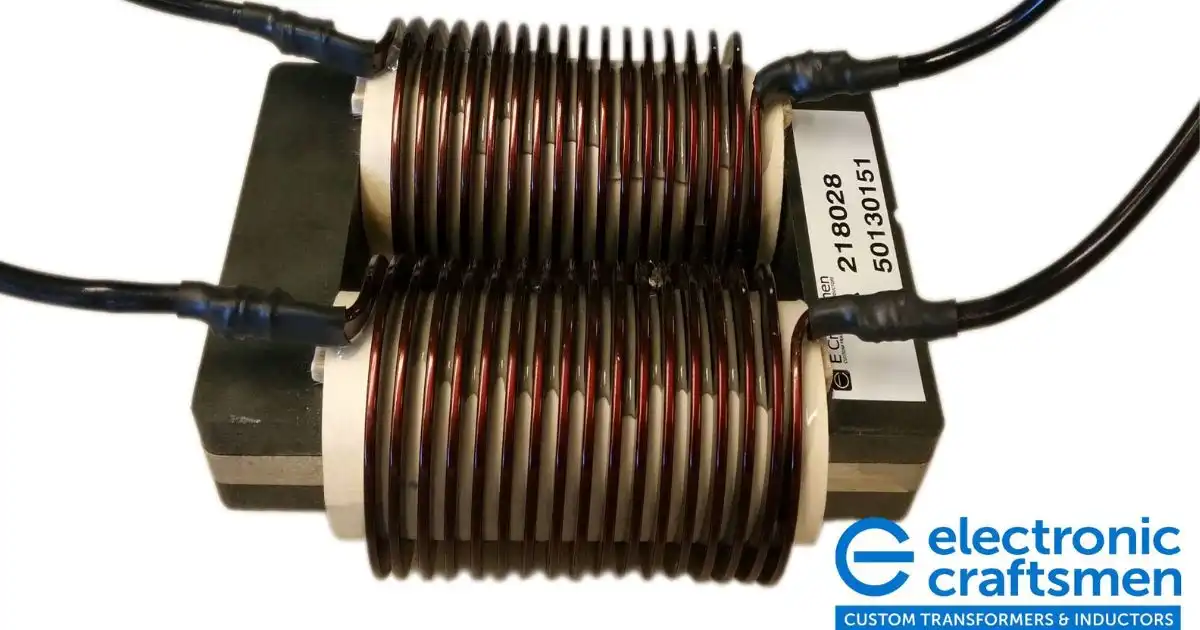
Standard inductors limit system performance in demanding applications. It's easy to assume an off-the-shelf part will get the job done. And sometimes it does—until it doesn't.
In high-frequency switching systems, thermally sensitive environments, or applications with tight form factor requirements, standard inductors can create more problems than they solve. You might run into EMI issues, voltage ripple, or excess heat that affects system performance.
Designers working in aerospace, medical, and automation sectors need precise specs. The wrong inductor affects everything downstream—from signal integrity to thermal reliability. That's where custom inductor design comes in.
Custom inductors give you control over every critical parameter: core material, winding structure, footprint, frequency response, and current handling. And that control translates directly into performance. This is especially true in systems with non-standard requirements.
At Electronic Craftsmen, we specialize in custom magnetic components for applications that can't rely on off-the-shelf solutions. With over 68 years of engineering experience and in-house ferrite grinding, thermal simulation, and encapsulation capabilities, our team helps you meet your requirements.
Why Standard Power Inductors Limit Performance
A common approach is to pick a standard power inductor that meets the basic specs on paper. But what looks good in the datasheet doesn't always translate to real-world performance. That mismatch shows up fast in high-frequency, high-efficiency, or space-constrained designs.
Standard inductors come with fixed parameters. These include core type, wire gauge, winding configuration, and physical dimensions. You can't optimize these for your circuit. That often leads to underperformance: higher core losses, elevated temperatures, or noise issues that hurt overall system reliability.
Let's say you're building a compact industrial power converter. A standard inductor might meet voltage and current specs on paper. But under peak load, its magnetic flux density pushes the core into saturation. That leads to excess heat, performance derating, or the need for extra cooling.
In medical systems or sensitive control circuits, even a slight mismatch can introduce ripple, distortion, or electromagnetic interference. And once you're troubleshooting EMI in a finished layout, it's already costing time and money.
When tolerances are tight, standard parts become the compromise—not the solution. That's when custom inductor design makes sense.
What Custom Inductor Design Lets You Control?
Custom inductor design gives you more than just a tighter tolerance. It lets you specify how the magnetic component behaves under real conditions. This includes temperature, frequency, current, layout constraints, and system integration.
Core material is one of the biggest levers. It affects everything from energy losses and saturation levels to how stable your inductance remains at high frequencies. Choosing the right material helps control core losses, reduce heat, and improve system efficiency.
Winding configuration matters just as much. With custom design, you can select the wire gauge, winding technique, and layer arrangement to match your current density and skin effect requirements. That's especially useful in high-frequency magnetics. Off-the-shelf winding layouts can introduce unnecessary losses here.
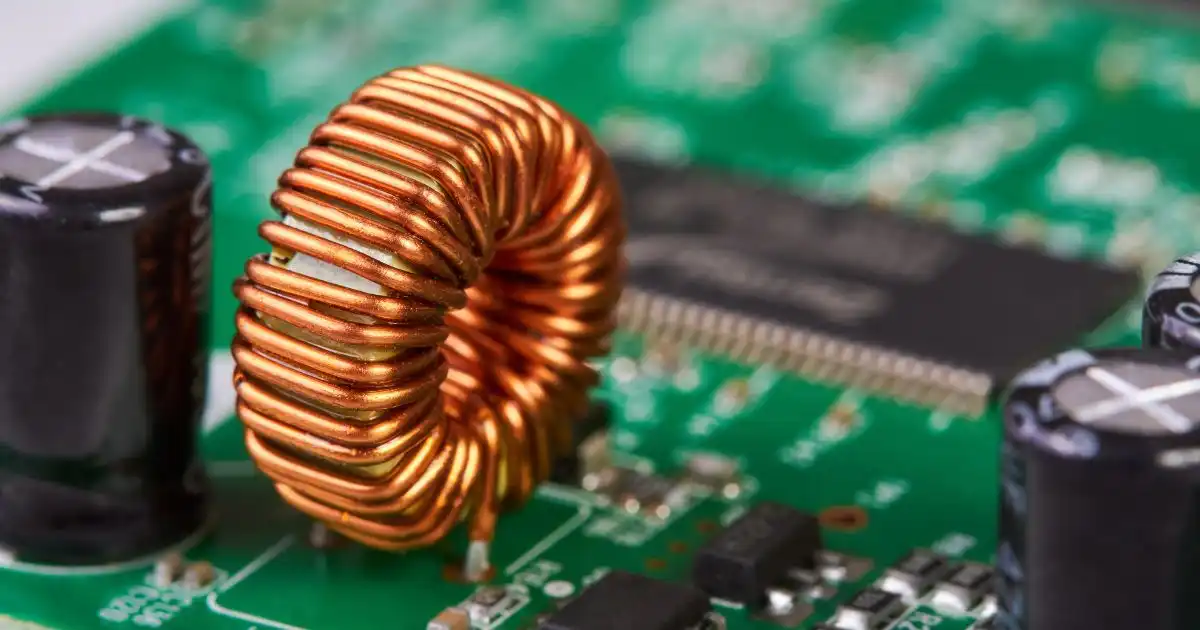
You also control the shape, mounting format, and enclosure. Need a low-profile inductor with minimal radiated noise? Potting or encapsulation can help. Trying to fit a custom footprint on a tight PCB layout? Precision-wound toroids or rectangular wire coils can be built to fit. And you won't sacrifice thermal performance.
When you design the inductor to match the system, rather than forcing the system to work around the part, you eliminate a lot of hidden trade-offs.
Applications That Benefit from Custom Inductors
Some applications don't leave room for compromise. In those cases, custom inductors aren't just helpful—they're necessary.
Medical equipment is a clear example. Diagnostic systems, patient monitors, and imaging devices rely on signal integrity and noise suppression. A generic inductor can introduce ripple or EMI that interferes with sensitive measurements.
And because these are life-critical systems, the margin for error is slim. Custom designs support regulatory compliance, thermal stability, and electromagnetic compatibility. They do this even in compact, enclosed housings.
Aerospace systems place extreme demands on size, weight, and environmental durability. In avionics or satellite subsystems, inductors must withstand vibration, thermal cycling, and wide frequency swings.
A standard unit might not survive launch conditions. It might not meet qualification requirements without redesign. With a custom inductor, you can model performance across altitudes, match thermal profiles, and keep EMI within narrow bounds.
Industrial automation often calls for inductors that can carry high current without overheating. This is especially true in closed cabinets or humid environments. Off-the-shelf inductors tend to run hot or require derating.
Custom assemblies can be encapsulated, sealed, and dimensioned to match airflow and mounting constraints. This improves both safety and uptime.
Renewable energy systems add another layer of complexity. Temperature swings, power harmonics, and continuous cycling are all factors. In EV chargers or solar inverters, magnetics must operate reliably outdoors, sometimes 24/7. Custom power inductors help manage harmonic distortion, optimize thermal response, and extend operating life under variable loads.
How Custom Inductor Design Improves System Performance?
When you design the inductor for the system and not the other way around, you reduce risk across the board. It's not just about matching the specs. It's about improving how the entire circuit performs under load, in real conditions.
Custom inductors improve efficiency by reducing core and copper losses. That means less wasted energy, lower operating temperatures, and more stable output. This is especially important in high-frequency or high-current designs. You'll see fewer hotspots, smaller thermal margins, and longer component life as a result.
Electromagnetic interference is another critical area. A standard part might meet general EMI specs, but a custom winding pattern or core shape can reduce radiated noise in the exact band your application needs. That makes certification easier and keeps noise out of nearby subsystems. This is important in everything from medical diagnostics to aerospace telemetry.
Custom builds also support tighter mechanical integration. When inductors are designed to match your enclosure, airflow pattern, or connector layout, you get more compact assemblies with fewer compromises. And because you control the magnetic behaviour, you're less likely to see ripple, ringing, or unexpected coupling issues down the line.
All of this leads to better reliability, easier compliance, and fewer redesigns late in the project cycle.
Partnering with a Custom Magnetics Manufacturer
The success of a custom inductor doesn't start on the production floor. It starts in the design review. That's where your electrical, thermal, and mechanical requirements come together. And that's why working with a manufacturer who understands system-level impacts matters.
At Electronic Craftsmen, we collaborate directly with your engineering team. You're not just submitting a drawing. You're defining what the inductor needs to achieve in the real world. That includes reviewing target inductance, frequency range, operating environment, current profile, and physical constraints.
Some teams rely on our custom magnetic components capabilities as part of broader strategies. This is especially true when form factor, duty cycle, or thermal constraints call for a tailored approach.
We also bring in-house capabilities that reduce variables across the build. Our database of over 10,000 designs helps us identify proven approaches for similar applications. With AS9100 and ISO9001 registration, we maintain quality standards that support critical applications.
That level of control across design, testing, and manufacturing means fewer late-stage revisions and better long-term performance in the field. When your application can't afford to rely on standard components, a true design partner helps get it right.
Why It Pays to Stop Compromising
Standard inductors are built for average conditions. But if your application is anything but average—tight thermal margins, non-standard frequencies, unusual size constraints—they often don't meet requirements.
When the inductor is selected early in the process and designed around actual system needs, everything else performs better. You're no longer compensating for heat that shouldn't be there. You're not re-routing traces to manage EMI that could've been avoided. Instead of solving problems caused by the inductor, you're using the inductor to solve problems.
Custom inductors let you optimize magnetic behaviour—not just the physical dimensions. You control how it handles current, how it dissipates heat, how it integrates with your enclosure, and how it affects downstream circuitry. That's how you improve system-level outcomes like efficiency, signal clarity, thermal stability, and compliance.
This becomes especially critical in regulated or life-critical environments. In medical systems, you're designing around safety and certification timelines. In aerospace, you're designing for vibration, cycling, and weight. And in industrial systems, you're dealing with round-the-clock operation in less-than-ideal thermal conditions. There's no room for trial-and-error. The magnetic components have to perform predictably from day one.
At Electronic Craftsmen, we've spent decades supporting engineers who needed more than catalogue options. With in-house capabilities—from ferrite grinding to precision winding to thermal testing—we help you get from initial model to tested unit. You don't have to wait on third-party vendors or adjust your layout around limitations.
So, if you're looking at power inductors and thinking, "This is close, but not quite right"—there's probably a better option. Let's design the right one.