Autotransformer vs. Isolation Transformer: Cost, Size, & Use Case
Ever plugged in equipment only to have it fail unexpectedly? The transformer you picked might be the culprit. When designing power systems, choosing between an autotransformer and an isolation transformer directly impacts safety, performance, reliability, and cost.
The wrong choice can lead to voltage fluctuations, equipment damage, and safety hazards that won't become apparent until your system is already in the field. The consequences go beyond technical headaches. Choose poorly and it will affect project timelines, budgets, and equipment lifespan.
Undersized transformers overheat and fail prematurely. Oversized ones waste space and materials. And choosing the wrong type might mean your equipment fails regulatory compliance or creates interference with other systems.
This post examines the key differences between autotransformers and isolation transformers, focusing on when to use each type. We'll cover their construction, costs, size differences, safety implications, and ideal applications to help you make the right choice for your specific needs.
How Autotransformers and Isolation Transformers Work
Understanding the fundamental construction difference between these transformer types helps explain their performance characteristics.
Autotransformer Construction
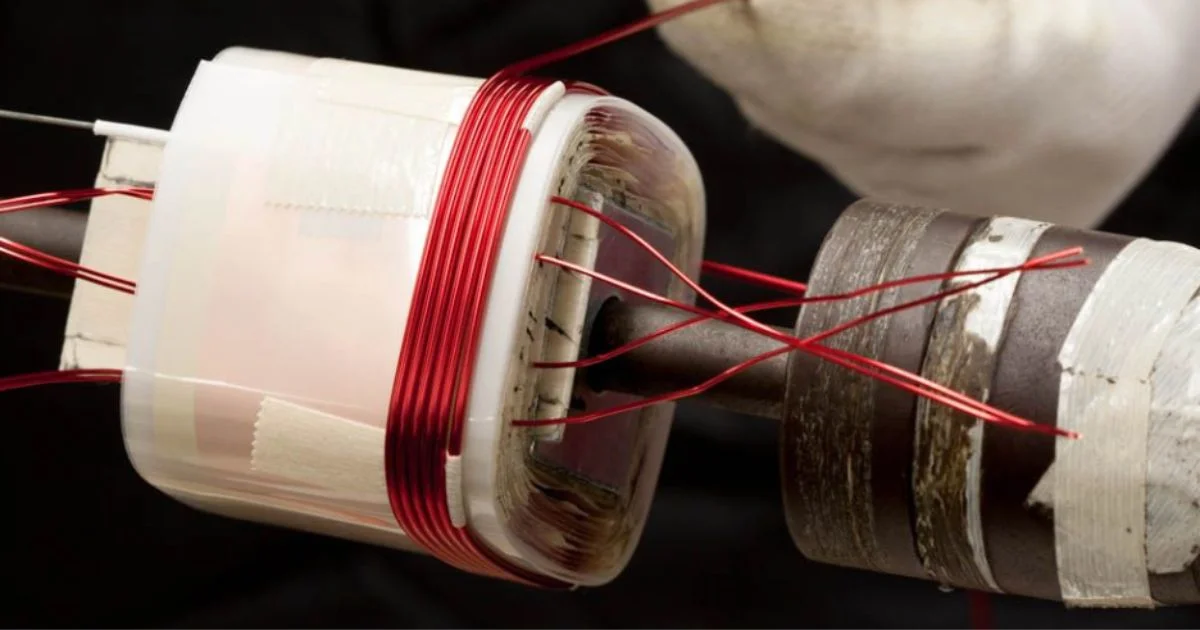
An autotransformer uses a single winding that acts as both the primary and secondary. This shared winding creates a direct electrical connection between the input and output circuits. The input voltage connects to the full winding, while the output taps at a specific point along the same winding to achieve the desired voltage transformation.
The key point here is that in an autotransformer, the input and output share an electrical connection. This shared connection is what creates both the advantages and limitations of autotransformers.
Isolation Transformer Construction
An isolation transformer uses two separate windings—primary and secondary—that are physically separate but magnetically coupled through a core. The primary winding connects to the input voltage, and the secondary winding delivers the output voltage.
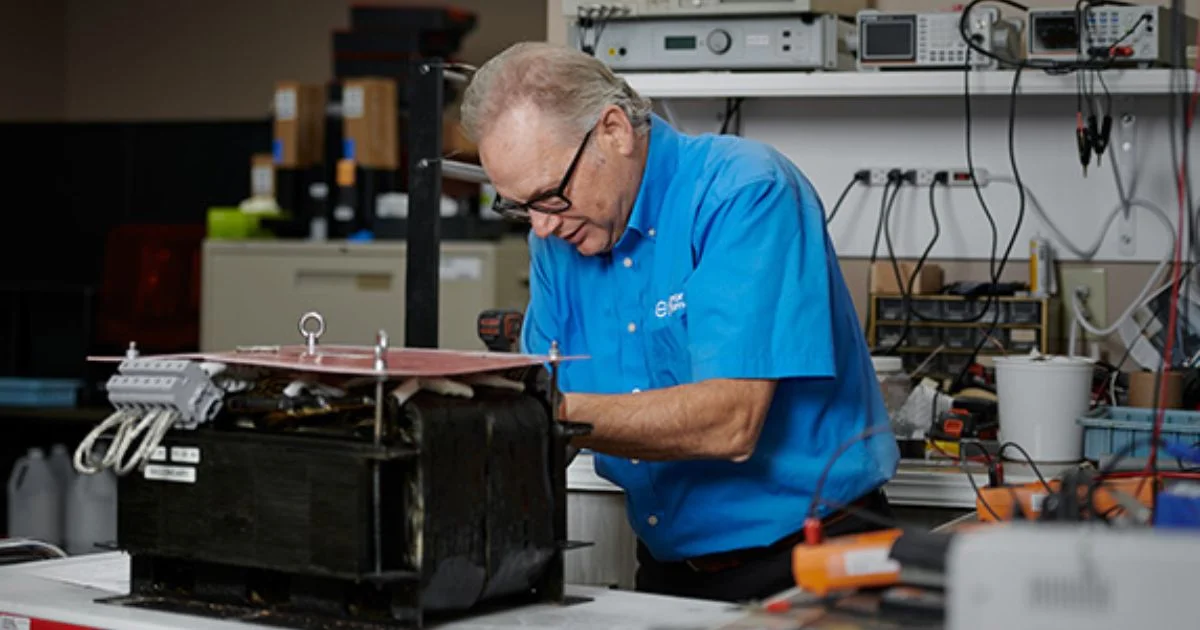
Since 1956, Electronic Craftsmen has been designing and manufacturing both types of transformers, with capabilities ranging from mW to 50kVA @ 60Hz and up to 200kVA @ 20kHz.
This separation means there's no direct electrical connection between input and output. Power transfers through magnetic coupling only, creating galvanic isolation between the circuits.
This isolation is a critical safety feature in many applications, particularly where electrical separation is required to prevent shock hazards or ground loops.
Cost and Size Comparison
The construction differences between these transformer types translate directly to cost and size variations that affect your design choices.
Why Autotransformers Cost Less
Autotransformers typically cost less than comparable isolation transformers for several reasons:
They use less copper wire since they have a single winding instead of two.
They require less core material due to more efficient power transfer.
They're simpler to manufacture with fewer assembly steps.
They're smaller and lighter, reducing shipping costs.
A good rule of thumb: an autotransformer will generally cost about half to two-thirds what a comparable isolation transformer costs for the same power rating.
Size and Weight Advantages
The size and weight difference is significant for space-constrained applications. Autotransformers can be smaller and lighter than isolation transformers with the same voltage transformation and power rating. This makes autotransformers particularly valuable in:
Portable equipment where weight matters.
Densely packed electronic enclosures.
Weight-sensitive applications like aircraft systems.
Retrofit installations with limited space.
However, as noted by Natural Resources Canada, energy efficiency regulations are increasingly important when selecting transformers, and size isn't the only consideration.
Safety Considerations: When Isolation Matters
Despite the cost and size advantages of autotransformers, safety considerations often make isolation transformers the necessary choice.
When You Need Galvanic Isolation
Isolation transformers provide critical safety benefits in many situations:
Shock protection: They prevent direct electrical paths between power source and equipment, reducing shock hazards.
Ground loop elimination: They break ground paths that cause noise in sensitive equipment.
Common mode noise rejection: They reduce electrical noise that travels on both power conductors.
Fault isolation: They contain electrical faults to one side of the transformer.
Electrical isolation is a fundamental safety principle in many workplaces' electrical standards.
Autotransformer Safety Limitations
The direct electrical connection in autotransformers creates several safety limitations:
They don't provide protection against electric shock.
They don't block DC voltage components.
They don't prevent ground loops.
They can't isolate sensitive equipment from power line noise.
It's tempting to choose an autotransformer based solely on cost and size benefits. But in applications where any of these safety factors matter, an isolation transformer is the appropriate choice despite the higher cost and larger size.
Choosing the Right Transformer Type
Each transformer type has ideal applications where its characteristics provide the best value.
Best Uses for Autotransformers
Autotransformers excel in these applications:
Voltage conversion where isolation isn't required.
Buck-boost applications for voltage adjustments.
Three-phase systems where size and cost are critical.
Power distribution in systems with existing safety measures.
Motor starting applications where reduced voltage is needed temporarily.
Electronic Craftsmen supports these applications with designs that can operate at frequencies from 25Hz to 500kHz and with working voltages up to 12kV (frequency dependent).
Best Uses for Isolation Transformers
Isolation transformers are the right choice for:
Medical equipment where patient safety is critical.
Test and measurement devices that need clean power.
Audio equipment to eliminate hum and noise.
Industrial control systems with sensitive electronics.
Telecommunications equipment requiring noise immunity.
International travel adapters providing safety between different power systems.
Various standards specify isolation requirements for many of these applications, particularly in medical and telecommunications equipment.
Making the Right Selection for Your Application
When deciding between transformer types, consider these key factors:
Safety requirements: Does your application require electrical isolation for safety reasons?
Noise sensitivity: Is your equipment sensitive to electrical noise or ground loops?
Budget constraints: Is cost a primary factor in your design?
Space limitations: How important are size and weight in your application?
Regulatory compliance: Do applicable standards require isolation?
Here's a simple comparison of the key differences to help with your decision:
Autotransformers cost less, are smaller and lighter, offer no electrical isolation, provide poor noise rejection, have higher efficiency, but limited safety features.
Isolation transformers cost more, are larger and heavier, provide complete electrical isolation, offer excellent noise rejection, have slightly lower efficiency, but superior safety features.
When to Use a Combined Approach
In some cases, a system might benefit from using both transformer types in different areas. This kind of mixed strategy is common in industrial and commercial projects where budget, safety, and layout compete for priority.
For example, a manufacturing system might use:
Isolation transformers for control circuits and sensitive electronics.
Autotransformers for simple voltage conversion in motor circuits.
With over 10,000 unique transformer and inductor designs in our database, we can help determine the optimal transformer configuration for complex systems. This mixed approach allows you to apply the right transformer type where it matters most while optimizing costs elsewhere in your system.
Installation and Environmental Considerations
Beyond the basic selection criteria, installation environment and operating conditions also influence your transformer choice.
Temperature and Cooling Requirements
Autotransformers typically run more efficiently than isolation transformers, which means they generate less heat for the same power rating. This can be important in:
Enclosed spaces with limited ventilation.
High ambient temperature environments.
Applications where cooling is difficult or expensive.
Electronic Craftsmen offers transformer designs with temperature class ratings up to 220°C, though 155°C/Class F is typical for most applications. The right insulation system ensures reliable operation even in challenging thermal environments.
Environmental Protection Needs
For harsh environments, both transformer types can be protected, but the approach differs:
Open-frame designs work well in controlled environments.
Vacuum encapsulation provides protection against moisture and contaminants.
Custom enclosures shield against physical damage and environmental factors.
Encapsulation is particularly important for transformers used in marine, outdoor, or industrial settings where exposure to moisture, salt, chemicals, or dust is likely.
Our vacuum encapsulation chambers can process units up to 24 inches with vacuum levels to 100 mTorr, ensuring complete protection even in the most demanding applications.
Maintenance Considerations
Maintenance requirements can also factor into your transformer selection:
Autotransformers often have fewer failure points due to simpler construction.
Isolation transformers provide better protection for the equipment they power, potentially reducing downstream maintenance.
Both types benefit from proper installation with adequate ventilation and protection from environmental stressors.
The right transformer, properly specified and installed, should provide years of trouble-free service with minimal maintenance. This is especially true for transformers manufactured to high quality standards with appropriate safety margins in their design.
Balancing Performance, Safety, and Cost
The choice between an autotransformer and an isolation transformer ultimately comes down to your specific application requirements. While autotransformers offer significant advantages in cost, size, and efficiency, isolation transformers provide critical safety and performance benefits that are essential in many applications.
Understanding these differences helps you make informed decisions that balance performance, safety, and cost appropriately. For applications where electrical isolation isn't critical, autotransformers offer excellent value. But when safety, noise immunity, or regulatory compliance matters, the additional cost of an isolation transformer is a necessary investment.
Custom Solutions for Specific Requirements
Standard off-the-shelf transformers often represent compromise solutions that might not perfectly match your application's needs. Custom-designed transformers, on the other hand, can be optimized for specific performance parameters:
Voltage transformation ratios tailored to exact requirements.
Physical dimensions designed to fit available space.
Thermal performance optimized for the operating environment.
Noise characteristics matched to sensitive applications.
Safety features aligned with specific regulatory requirements.
Our experienced engineering team can help evaluate your specific needs and recommend the optimal transformer solution—whether that's an autotransformer, an isolation transformer, or a hybrid approach that combines elements of both. Schedule a consultation.